
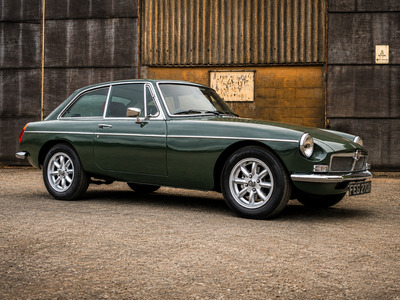
A quick MGB V8 build looks simple on paper. Find a decent shell, source a Rover V8, bolt in the obvious parts, enjoy the soundtrack. Job done.
In practice, it's never that simple, and every properly built MGB V8 proves the same point: the cars that drive well, start cleanly, and stay reliable years later aren't the ones built for headline power. They're the ones built for balance.
That's because nobody buys an MGB V8 for the numbers alone. They want the shove and the noise, yes, but they also want a car that starts on the button, runs cool in traffic, brakes straight, tracks true on a bad road, and feels like one car, not a collection of upgraded parts bolted together and hoped for the best. The gap between those two outcomes comes down to specification and standard of work, not the badge on the cam cover.
The Real Lesson: The Engine Is the Easy Part
Most conversations about V8 conversions fixate on capacity, carburettor choice, and quoted bhp. Those are the least interesting questions.
The ones that actually determine whether the car is any good are quieter:
Was the shell worth building in the first place?
Was the steering geometry reconsidered once V8 weight and torque went in?
Was the cooling system designed around real road use, or a Sunday-morning idle on the workshop floor?
A great MGB V8 should feel factory in its manners, even when the output is well beyond anything the factory offered. That means proper clearances, sensible gearing, predictable brakes, and suspension that absorbs the extra torque instead of turning the car harsh or nervy. Plenty of cars can be made fast in a straight line. Far fewer are genuinely pleasant to live with.
It Starts With the Shell, Not the Engine
Every worthwhile V8 build begins with an honest assessment of shell condition. This is the part that gets underestimated, because a fresh engine and smart paint are far easier to admire than structural integrity hidden under the surface.
On an MGB, the shell is the foundation. No amount of performance hardware compensates for poor metalwork underneath it. Once V8 torque enters the equation, any weakness in the shell stops being theoretical, it shows up. Doors that won't shut cleanly, panel movement, vague steering, inconsistent suspension behaviour: these usually trace back to the body, not the running gear bolted to it.
We recently assessed a customer's shell that looked sound but showed corrosion in the sills once we removed the layers of underseal. We talked the owner through the remedial work needed before a single performance part went near it.
If the shell needs real work, the only sensible move is to do it properly before the build progresses. Shortcutting the body stage almost always costs more later, either in rework, or in a finished car that never quite feels right, no matter how good the engine is.
Engine Choice Is Only the Beginning
The Rover V8 remains the natural heart of an MGB conversion, and for good reason, it suits the car's proportions, keeps weight sensible, and delivers torque in exactly the way an MGB rewards on the road. But even here, the “best” answer depends entirely on the brief.
A mildly tuned road engine will often produce a more satisfying car than a highly stressed unit chasing headline output. For a road-focused MGB, tractability wins: clean pickup from low revs, a stable idle, manageable heat, sensible fuel delivery. A peaky specification might impress for ten minutes at a car meet and become tiring after ten months of ownership.
Cam choice, compression, induction, and exhaust all need to be selected as a matched package, not assembled piecemeal. Get that wrong and the car feels lumpy, over-fuelled, and awkward at low speed. Get it right, and the V8 feels like it always belonged there.
Where Road Manners Are Actually Won or Lost
Transmission has an outsized effect on whether the finished car is genuinely usable. Ratios need to suit the engine's torque curve and the kind of driving the owner will actually do. A gearbox that feels lively on a five-mile test route can become tiresome on a two-hour run if first gear is too short or cruising revs are too busy.
Axle ratio matters just as much, and it's one of the most underrated details in the whole build. Too low, and the engine's potential is wasted in unnecessary revs and noise. Too tall, and the car feels flat off the line despite a strong V8 underneath. There's no universal “correct” ratio, it depends on tyre size, gearbox choice, and how the car will actually be used.
On most road-spec builds, we default to a 3.07:1 with a five-speed conversion, moving to 3.31:1 where the customer asks for a sharper feel on take-off.
A proper build also gets clutch weight, driveline alignment, and mounting integrity right. If a V8 MGB feels snatchy or crude around town, that's not simply “the price of performance,” it usually points to a mismatch somewhere in the specification.
Cooling and Fuel Systems: Where Guesswork Gets Exposed
Most disappointing V8 conversions don't fail under hard driving, they fail in ordinary traffic. Heat soak, inconsistent fuelling, and poor under-bonnet management are what turn a promising build into a frustrating one.
Cooling has to be engineered around real-world use: radiator capacity, airflow, fan performance, hose routing, and header arrangement all working together, not treated as separate line items. A car that stays cool on a spring morning but struggles in summer traffic or after a spirited run hasn't been properly sorted, it's been assembled and hoped for the best.
We've had cars arrive that drove OK on a short run then overheated sitting in queued traffic twenty minutes later. The fix wasn't a bigger radiator, it was a quality electric fan installed correctly with good control.
Fuel delivery needs the same discipline. Too many builds get symptoms blamed on the carburettors when the real culprit is pump choice, pressure control, or poor line layout. On a properly sorted car, hot starting, a steady idle, and clean pull-through should be the norm, not occasional good luck.
One car came to us having already been through two other workshops chasing a ‘carburettor problem’ that turned out to be a failing fuel pressure regulator.
Brakes and Suspension Aren't an Afterthought
The extra performance of a V8 conversion demands equal attention to chassis setup, and that doesn't mean building something hard and uncompromising. In fact, the best road cars in this segment deliberately avoid that mistake.
Spring rates, damper selection, ride height, and bush choice all need to support control without stripping out the MGB's basic charm. It still has to work on British roads. Over-stiffen the suspension and the car turns skittish, losing confidence exactly when it should feel most planted.
Brakes deserve the same discipline. Bigger isn't automatically better, pedal feel, balance, and repeatability matter more than raw component size. A well-sorted braking setup inspires confidence from the very first stop. It shouldn't come with a disclaimer about needing to “get used to it.”
Steering response rounds this out. Front-end geometry, tyre choice, and alignment all decide whether the car feels eager and precise or heavy and vague, and it's exactly why specialist MGB experience tends to outperform a generalist approach here.
What to Ask Before You Buy One
Broad claims aren't evidence. When you're looking at a finished V8 MGB, the confidence should be in the details:
How was the shell prepared?
What's the actual engine specification?
How were cooling and exhaust arranged?
What was fitted to the suspension and braking system?
Was the car developed to be genuinely road-ready, or simply assembled?
Demonstrable workshop knowledge, backed by over three decades of hands-on MGB experience, adds real confidence, and it matters commercially as well as mechanically. A well-documented, properly rebuilt MGB V8 holds its appeal far better than a car with an uncertain history and no clear story behind it. Buyers in this market aren't just purchasing performance. They're purchasing certainty.
“What sold me wasn't the spec sheet, it was seeing the build photos and knowing precisely what went into the car,” one recent CCHL customer told us.
Why the Best V8 MGBs Still Feel Like MGBs
The standout cars are rarely the ones chasing extremes. They're the ones that keep the essential MGB character intact while adding torque, flexibility, and a genuinely serious turn of pace. That's a subtle target, and hitting it takes as much restraint as ambition.
It's easy to overbuild an MGB V8: wheels too large, gearing too aggressive, suspension too stiff, engine tune too fussy. The result can look dramatic on a spec sheet and feel worse on an actual road. The better route is building for the job the car will really do, fast road use, weekend touring, club events, and everyday ownership.
We've talked customers out of over-specified builds more than once, walking them through why a slightly milder tune and sensible gearing would suit their actual driving far better than the headline spec they'd originally asked for.
That's the thinking behind every car that leaves California Classics (Hull) Ltd. We've been rebuilding MGBs for over three decades, and the value in a properly prepared MGB isn't just that it's been rebuilt, it's that it's been thought through by people who've spent thirty years learning exactly where these cars reward careful specification, and where they punish guesswork. At CCHL, that thinking is built into every stage of the process, not applied as an afterthought once the engine's in.
The Takeaway
Judge the finished car as a whole. Engine note and acceleration sell the dream, but ownership quality comes from everything sitting underneath that first impression.
A strong or replacement shell. A sensible engine specification. A matched transmission. Stable cooling. Properly sorted brakes and suspension. Clear documentation.
That's what turns a V8 MGB from an interesting project into a genuinely satisfying classic.