
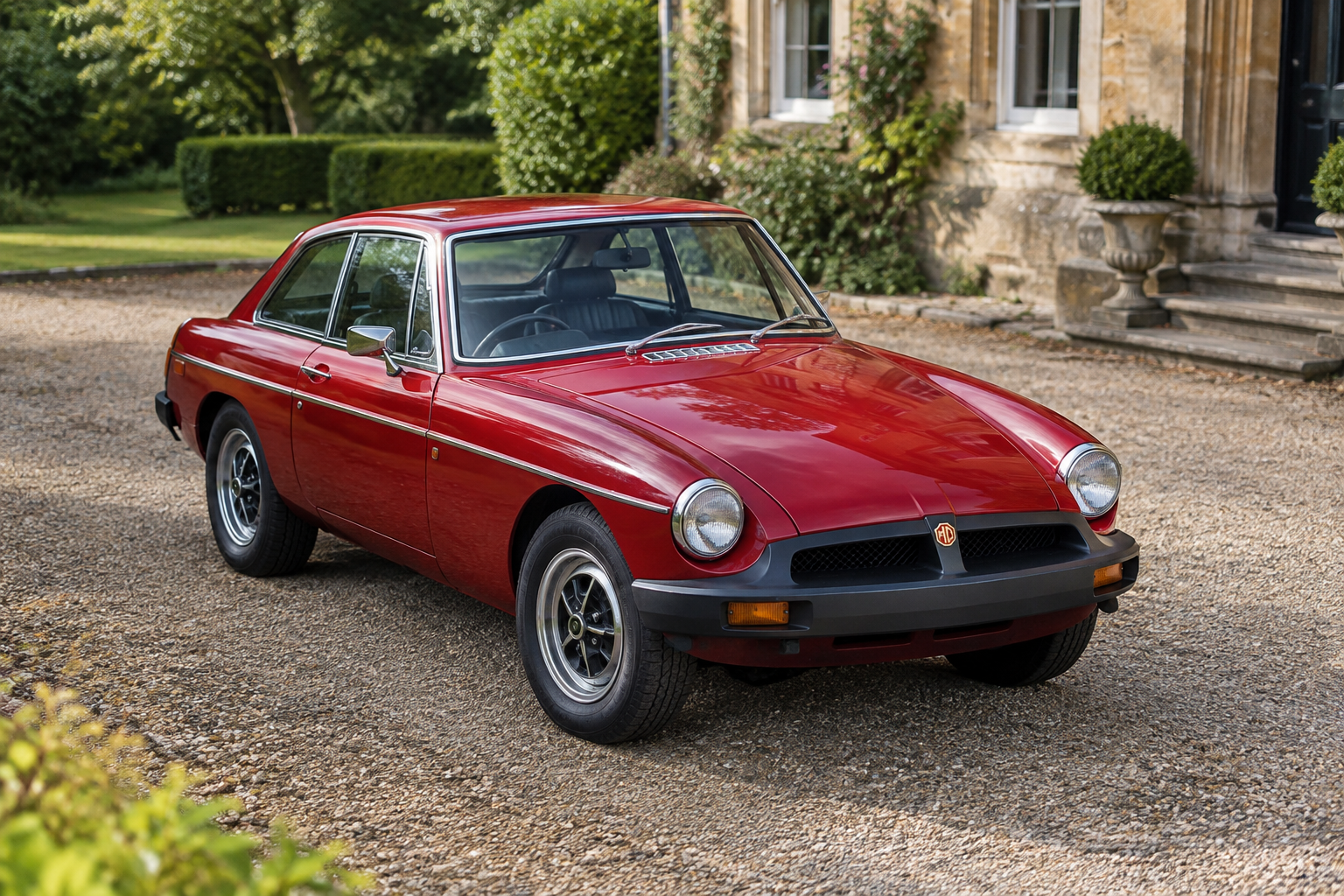
When assessing an MGB, the condition of the car is only part of the story. The documents that accompany it can provide useful context, reveal how it has been maintained and help establish whether its history is coherent. They cannot replace a physical inspection, but they can make it easier to understand what you are looking at.
Provenance is sometimes treated as a matter of presentation rather than substance. In practice, it is mainly about connecting the car in front of you with a sensible, traceable history. That may include registration documents, invoices, old photographs, workshop records, owners’ notes and evidence of restoration work. Some cars have extensive files; others have very little. The important point is to assess the information carefully rather than assuming that a thick folder automatically means a better car.
What does MGB provenance mean?
Provenance is the documented background of a vehicle. It can cover where the car has been, who has owned it, how it has been used and what work has been carried out. For an MGB, useful provenance might include a sequence of registration documents, servicing invoices, previous sale descriptions, restoration photographs or correspondence relating to parts and repairs.
It is helpful to separate three different ideas:
- Identity: whether the vehicle’s identifying details correspond with its documentation.
- History: what can be established about its ownership, use and maintenance.
- Condition: what the car is actually like today.
These areas overlap, but none proves the others. A car with limited history may still be sound and enjoyable. A car with extensive paperwork may still require substantial mechanical or bodywork attention. Good judgement comes from considering all three together.
Start with the car’s identity
The first task is to compare the car with the available registration documentation. Check that the registration number, make, model description and identifying numbers are consistent with the vehicle. The relevant numbers should be inspected on the car itself, not simply copied from a document or sales description.
Older vehicles can have paperwork containing descriptions that are less detailed than a modern enthusiast might expect. Model terminology may also vary between documents. That does not automatically indicate a problem, but any discrepancy should be understood before a purchase is agreed.
Identification marks should be legible and appear appropriately presented for the vehicle. If a number is difficult to read, appears altered or does not correspond with the paperwork, pause the process and ask for a clear explanation. Do not rely on assumptions about why a discrepancy exists.
It is also worth looking at the car as a whole. The body style, interior, engine installation, dashboard, wheels and other features should make sense alongside the model description and claimed history. Components may have been changed during decades of ownership, so a non-original part is not automatically a concern. The key question is whether the changes are known, properly carried out and suitable for the intended use.
Reading the registration documents
The registration document is an important part of the vehicle’s identity, but it is not a full mechanical inspection or restoration certificate. Use it to confirm the basic details and to understand whether the seller’s description is broadly consistent with the recorded information.
Look for continuity in the available documents and ask whether the current keeper’s details correspond with the person or business selling the car. If someone is selling on behalf of another owner, establish the arrangement clearly and make sure the appropriate paperwork will be available.
Changes to the vehicle should also be considered. An engine conversion, altered body style or other substantial modification may affect how the car is described and recorded. Ask for details of the work, including when it was carried out and whether supporting invoices or photographs exist.
Where the documentation raises questions, it is better to resolve them before committing than to hope they will be straightforward later. If necessary, seek specialist advice or contact the relevant vehicle registration authority for guidance on the correct process. Do not assume that a verbal explanation is enough.
What restoration records can tell you
Restoration files vary widely. Some contain photographs of the stripped shell, bodywork invoices, parts lists and detailed workshop notes. Others may consist of a small number of receipts and a few photographs. Both can be useful, provided they are interpreted realistically.
Photographs are particularly helpful when they show the car at different stages of work. Ideally, they should make it possible to follow the repair process from preparation through to completion. Images of the bare shell may reveal the extent of disassembly, while photographs of repaired areas can show whether attention was given to structural sections rather than only visible panels.
Invoices should be read for detail rather than simply counted. A long list of small purchases may demonstrate ongoing care, while a large restoration invoice may indicate that a significant project was undertaken. Neither proves the quality of the work. Ask what was included, what was excluded and whether any later work was required.
Be cautious with broad descriptions such as “fully restored” or “rebuilt” unless the supporting information explains what those words mean. Restoration can range from cosmetic improvement to a comprehensive dismantling and reconstruction. Establish which panels, structural areas, mechanical systems, trim and electrical components were actually addressed.
Assessing servicing and maintenance history
Routine maintenance records can be more informative than a dramatic restoration description. Invoices for servicing, fluid changes, brake work, suspension repairs, cooling-system attention and electrical diagnosis can help show how the car has been used and maintained since major work was completed.
Look for dates, mileage readings where available, descriptions of the work and the identity of the workshop or supplier. A record does not need to be perfect to be useful, but repeated entries over time are generally easier to interpret than a single recent invoice.
Try to identify patterns. Repeated attention to the same problem may suggest that an underlying fault was not fully resolved. Conversely, a sequence of age-related repairs may simply reflect sensible maintenance. Ask the seller about anything that appears unclear, and compare the records with the car’s present condition.
Parts invoices can also help identify changes from standard specification. For example, records may show that the car has received different wheels, a replacement gearbox, revised electrical components or alterations to the engine. Modifications should be assessed on their engineering quality and suitability, not merely on whether they differ from factory specification.
Ownership history and previous use
Previous keepers may have used the MGB for commuting, touring, competition, occasional weekends or long-term storage. Understanding that pattern can help explain the car’s current condition. A car used regularly may show more wear but may also have benefited from consistent running and servicing. A car stored for long periods may appear tidy while needing careful recommissioning.
Older photographs, club correspondence and personal notes can add useful context. However, remember that personal memories are not always precise, especially when ownership stretches over many years. Treat them as part of the overall evidence rather than as a substitute for inspection.
Ask how long the current owner has had the car, why it is being sold and what work has been completed during that ownership. Straightforward answers are usually more useful than polished descriptions. If the owner is unsure about a particular detail, that is not necessarily a fault; what matters is whether uncertainty is acknowledged and whether it can be investigated.
When the history is incomplete
Many classic cars do not have a continuous file. Paperwork may have been lost during a change of ownership, or work may have been carried out by an enthusiast without formal invoices. An incomplete history should not automatically rule out a car, but it should affect how confidently you can assess its past.
In this situation, place greater emphasis on the present condition and on an independent inspection. Check the body structure, mechanical systems, interior, wiring and evidence of previous repairs. A car with limited documentation can be a sensible purchase when it is honestly described and priced according to its condition. Equally, a car with a documented past still deserves the same physical checks.
You can also create a useful record from the day you take ownership. Keep invoices, photographs, parts information and notes about repairs in one place. Record dates and mileage where practical, and note any changes from the specification in which you acquired the car.
Making a sensible decision
When comparing MGBs, avoid treating provenance as a competition. A large history file is not a guarantee of quality, originality or reliability. Its value lies in helping you understand the vehicle and identify questions that need answering.
Before buying, prepare a short list covering identity, ownership, restoration, maintenance and modifications. Ask to see the relevant documents, inspect the car carefully and arrange an independent assessment where appropriate. If the vehicle is being considered for a substantial rebuild or specification change, discuss the intended result before work begins. Details of the work you may wish to commission can be discussed directly through the California Classics contact page.
For examples of how different MGBs are presented, you can view the company’s current stock and, where useful, the sold cars archive. These pages should be treated as illustrations of vehicles offered or previously sold, not as a substitute for inspecting a particular car.
The best paperwork is documentation that helps you understand the car without overstating what is known. Combine it with a careful inspection, sensible questions and a clear view of the work you may need to undertake. That approach gives you a stronger foundation for owning, maintaining or restoring an MGB for years to come.
FAQs
Is an MGB with no history worth considering?
It can be, but the lack of records means more emphasis should be placed on a detailed inspection and realistic assessment of the car’s current condition. Ask what the seller does know and document the car carefully if you buy it.
Do restoration photographs prove that an MGB was rebuilt properly?
No. Photographs can show the extent and sequence of work, but they do not prove the quality of hidden repairs, materials or assembly. Invoices, workshop information and a physical inspection are also important.
Should modifications be a concern when checking MGB provenance?
Not necessarily. Many classic cars have been modified during their lives. Establish what was changed, whether the work is documented, how well it has been carried out and whether it suits the way you intend to use the car.