
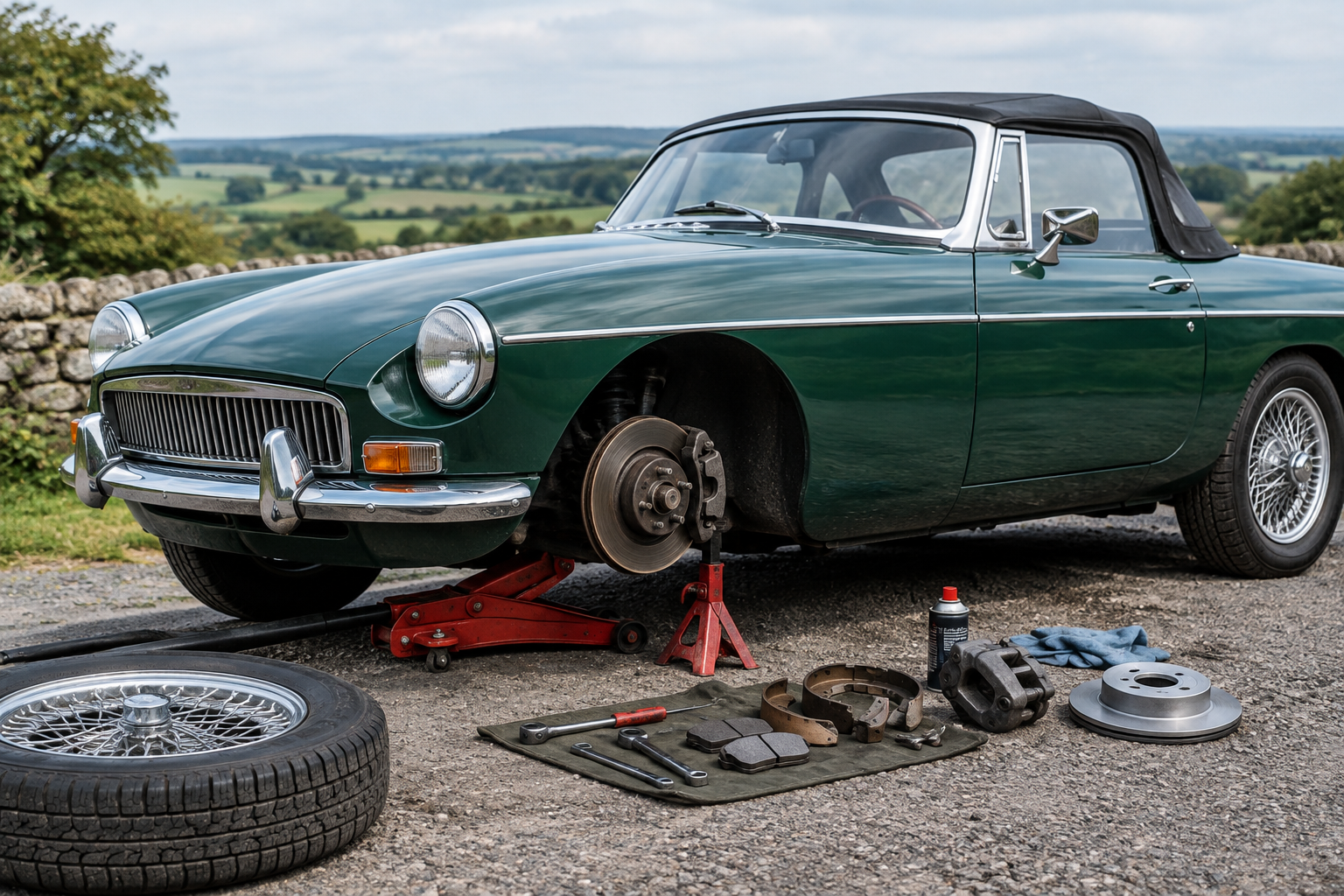
An MGB should feel reassuring under braking. The pedal should be firm and progressive, the car should remain stable and the brakes should release cleanly after each application. If the pedal feels spongy, the car pulls to one side or the brakes remain partially applied, those symptoms deserve attention before the car is used regularly.
Brake maintenance is not simply about replacing pads and shoes when they become worn. An MGB’s braking performance depends on the condition of its hydraulic components, pipes, hoses, discs, drums, cylinders, calipers and adjustment mechanisms. It also depends on correct assembly and regular use. A car that has spent long periods standing may have more brake-related work required than one that has covered greater distances with consistent servicing.
This guide explains the main parts of the MGB braking system, the checks an owner can make and the areas to consider when restoring or improving a car.
How the MGB braking system works
Most MGBs use hydraulic brakes operated by a pedal and master cylinder. Pressing the pedal moves fluid through the brake pipes and flexible hoses to the wheel cylinders or calipers. At the front, disc brakes use calipers to press pads against rotating discs. At the rear, drum brakes use wheel cylinders to push shoes against the inside of a drum.
The master cylinder converts pedal movement into hydraulic pressure. A servo, where fitted, assists the driver by reducing the effort needed at the pedal. The servo does not create braking force by itself; it provides assistance to the hydraulic system. A problem with the servo or its vacuum supply can therefore alter pedal effort without necessarily causing a fluid leak.
Because the system is hydraulic, air or compressible contamination in the fluid can produce a soft pedal. Leaks can reduce pressure and eventually lead to loss of braking. This is why apparently small signs, such as dampness around a union or a gradual change in pedal feel, should not be ignored.
What a healthy MGB brake pedal should feel like
There is no single pedal feel that applies to every MGB, particularly where components have been renewed or a servo has been fitted. However, the pedal should normally offer resistance that builds in a controlled way. It should not continue travelling towards the floor during steady pressure, and it should not require repeated pumping to provide an acceptable level of firmness.
A pedal that improves after pumping may indicate air in the system, excessive rear-brake adjustment clearance or movement within a component. A pedal that slowly sinks while firm pressure is maintained may point towards hydraulic leakage or an internal master-cylinder problem. Neither symptom should be treated as a normal characteristic of an old car.
When checking pedal feel, make sure the car is stationary, on level ground and secured against movement. A simple pedal check is useful, but it does not replace a detailed inspection.
Inspecting the hydraulic system
Begin with the brake-fluid reservoir and master-cylinder area. The fluid level should be checked against the appropriate marks, but the level alone does not prove that the system is sound. Look for discolouration, contamination and signs of fluid around the master cylinder or surrounding paintwork. Brake fluid can damage paint, so any spill should be dealt with carefully and promptly using an appropriate cleaning method.
Follow the rigid brake pipes along the car. Inspect their unions and the areas where they pass through clips or close to the body. Corrosion can develop beneath dirt or protective coatings, while vibration may cause a pipe to rub against another component. Pipes should be secure, correctly routed and free from significant corrosion, kinks or damage.
Flexible hoses need particular attention because external appearance can be misleading. Cracking, bulging, chafing or wetness are reasons for replacement. An internally deteriorated hose may also restrict fluid return, causing a brake to remain partially applied. If one hose is found to be in poor condition, the age and condition of the other hoses should be considered rather than treating the affected item in isolation.
Front discs and calipers
Front disc brakes are exposed to water, road dirt and heat. The disc faces should be reasonably even, without deep scoring, heavy corrosion or a pronounced ridge at the outer edge. Surface rust after storage is not unusual, but corrosion that remains after careful use may indicate that the disc needs closer examination or replacement.
Brake pads should wear evenly. A significant difference between the inner and outer pad can suggest a sticking caliper piston, restricted hose or seized sliding mechanism, depending on the caliper design. Uneven wear from side to side may indicate a problem affecting one wheel rather than the whole axle.
Calipers should be checked for fluid leakage, damaged seals and pistons that do not move and release correctly. A caliper that binds can create heat, accelerated pad wear and a tendency for the car to pull. After a short drive, carefully checking for abnormal heat at each wheel can provide a useful clue, but avoid touching brake components directly because they may be hot.
Rear drums, shoes and adjustment
Rear drum brakes require inspection inside the drums. The shoes should have usable friction material, and the linings should be securely attached and free from contamination. Oil or brake fluid on the linings can seriously affect braking performance and may require more than a simple clean-up.
The inside of the drum should be checked for excessive scoring, cracking, heat damage or a pronounced wear lip. The wheel cylinders should be inspected for leaks, seized pistons and damaged dust seals. A leaking cylinder can contaminate the shoes and allow air into the hydraulic system.
Correct adjustment is important. Excessive clearance between the shoes and drum increases pedal travel, while over-adjustment can cause drag and heat. Adjustment should follow the procedure appropriate to the particular MGB and the components fitted. If the adjusters are seized or damaged, replacing or repairing them may be necessary before reliable adjustment can be achieved.
Brake fluid and bleeding
Brake fluid absorbs moisture over time and can become contaminated during servicing. The correct fluid specification should be confirmed for the car and its existing components before topping up or changing fluid. Mixing incompatible fluids without understanding the consequences can damage seals or create an unreliable system.
Bleeding removes air and replaces old fluid, but it must be carried out in the correct sequence and with suitable equipment. The fluid should be kept clean, and the reservoir must not be allowed to run dry during the process. If the bleed nipple is seized, excessive force can break it or damage the caliper or cylinder. In that situation, careful freeing or component replacement is preferable to forcing the fitting.
After bleeding, inspect every union for leaks and check the pedal again. A firm pedal immediately after bleeding is encouraging, but the system should also be checked after the car has been driven carefully and the brakes have reached normal operating conditions.
Common MGB brake symptoms
- Spongy pedal: often associated with air, flexible-hose movement, worn components or excessive rear-shoe clearance.
- Pedal slowly sinking: may indicate hydraulic leakage or an internal master-cylinder fault.
- Pulling under braking: can result from unequal pad or shoe condition, a sticking caliper or wheel cylinder, contaminated friction material or a tyre problem.
- Brake drag: may be caused by a seized caliper, restricted hose, incorrect adjustment or a master-cylinder pushrod issue.
- Judder or vibration: may come from disc variation, uneven deposits, worn suspension or wheel and tyre problems, so the whole front end should be assessed.
- Squealing: can have several causes, including pad material, glazing, incorrect bedding or movement between components. Noise alone does not identify the fault.
Brake diagnosis should not rely on replacing parts at random. Compare the condition of components on both sides of the axle, look for patterns of uneven wear and establish whether the fault is hydraulic, mechanical or related to the friction surfaces.
Brake upgrades and originality
Many owners are happy with a standard braking system that is correctly assembled, adjusted and maintained. An original specification can suit a car used for touring and ordinary road driving, provided the components are in good condition.
Upgrades may be considered where the car is used more intensively, has a modified engine or regularly carries additional performance equipment. Possible changes include improved friction materials, refreshed calipers, different discs, braided flexible hoses or a revised servo arrangement. Every change should be considered as part of the complete system. A component that increases braking force without suitable tyres, pedal control or heat management may not produce a better-driving car.
Brake balance is particularly important. Altering front or rear braking characteristics can affect stability, especially when the road is wet or the car is lightly loaded. Any modification should be installed using compatible parts and checked carefully once complete. If you are commissioning a broader restoration, you can review the MGB rebuild specification for an indication of the areas that may be considered during a rebuild.
Servicing an MGB for dependable use
A sensible brake inspection should form part of every recommissioning or annual maintenance routine. Check the fluid, pipes, hoses, discs, pads, drums, shoes, wheel cylinders, calipers and adjustment. Confirm that the handbrake operates correctly and releases fully. Look for leaks after the car has been parked and investigate any change in pedal feel promptly.
Where an MGB is being considered for purchase, a documented brake inspection can be as valuable as a visual assessment of the body. If you are comparing cars, the current stock page may help you see which cars are presently offered, while sold cars provides a record of cars that are no longer available. For questions about a particular car or project, use the contact page.
The most important principle is straightforward: an MGB should stop in a predictable, straight and controlled manner. Good braking performance comes from correctly matched components, careful maintenance and proper testing, not from a single fashionable upgrade. Take time to understand the system, deal with small faults before they become larger ones and use specialist help whenever a repair falls outside your experience or equipment.