
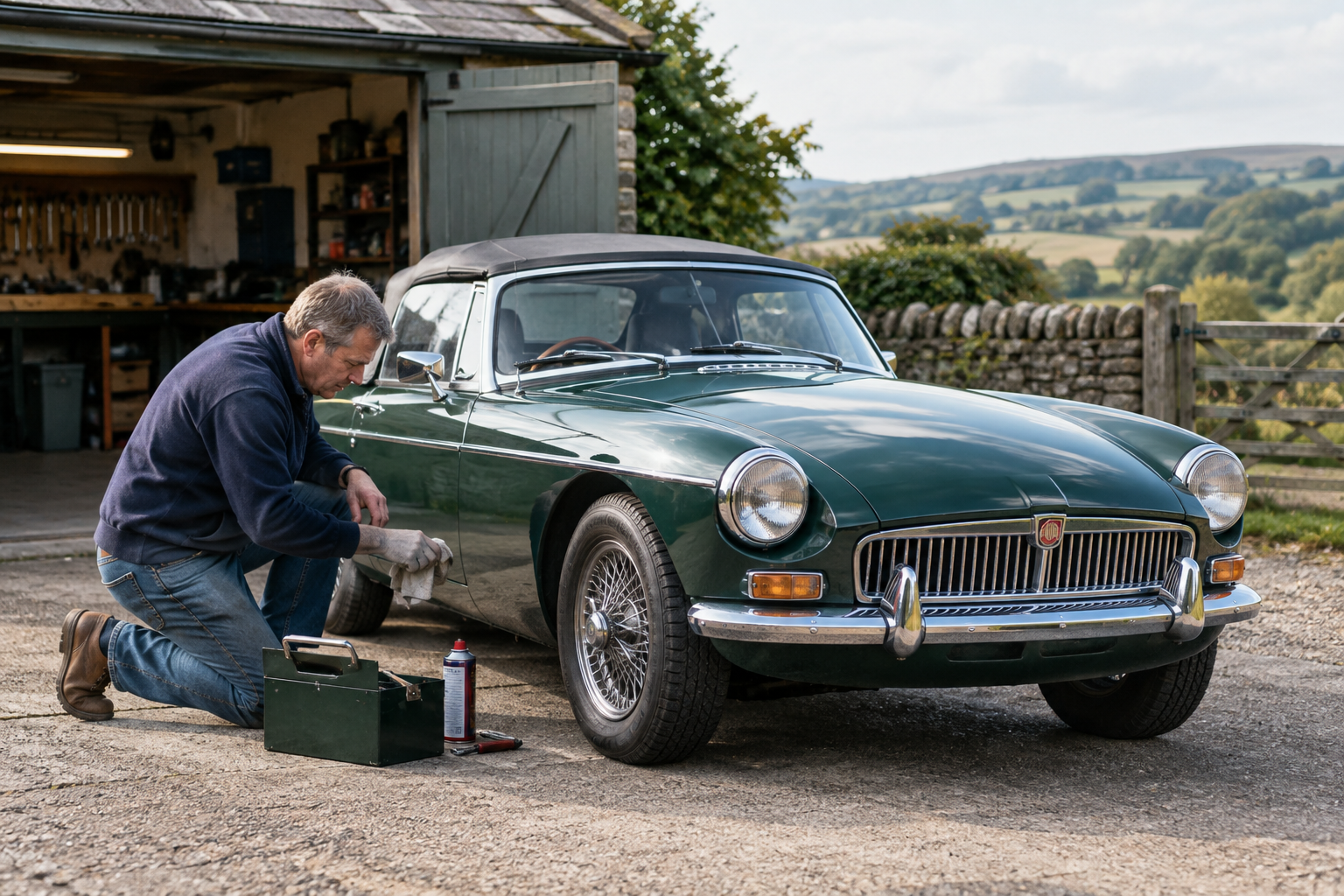
An MGB that is used regularly often gives its owner fewer problems than one that is left standing for long periods. Classic cars are not necessarily fragile, but age, moisture and inactivity can affect many of the systems that make an MGB enjoyable and safe to drive. A sensible storage routine, combined with careful recommissioning, can help you protect the car and identify developing faults before they become more serious.
Whether you own an MGB Roadster, an MGB GT or another variation of the model, the basic principles are similar. The car needs a dry environment, attention to its mechanical systems and occasional movement. It also needs to be approached as an older vehicle rather than treated like a modern car that can be parked indefinitely with little preparation.
Preparing an MGB for storage
Before putting an MGB away, start with a thorough clean. Dirt retained beneath the wings, around the sills or in the floor areas can hold moisture against the bodywork. Wash the exterior, clean the wheels and inspect the underside where practical. Allow the car to dry properly before covering it or moving it into storage.
The interior deserves similar attention. Remove damp items, leaves and debris, and check that carpets and trim are completely dry. If the car has been used in wet weather, leave the doors or windows open for a suitable period in a secure, dry location so trapped moisture can escape. Avoid sealing a damp interior beneath a cover.
Choose a storage space with good ventilation. A garage is useful, but a garage that suffers from condensation may be less suitable than expected. Water vapour can settle on metal components, brightwork and painted surfaces when temperatures change. Air movement, sensible moisture control and keeping the car away from obvious sources of damp can all help.
Use a breathable car cover rather than a material that traps moisture against the paint. The cover should be clean inside and large enough not to rub against mirrors, badges or raised edges. If the car is stored outside, additional protection is needed, but outdoor storage presents greater challenges from weather, condensation and security.
Fluids, fuel and the engine
Engine oil carries contaminants away from working surfaces, so an oil and filter change before a long storage period can be worthwhile if the service is due or the condition of the oil is uncertain. Follow the correct procedure for the engine fitted to the car and use suitable fluids and filters.
Fuel is another consideration. Petrol can deteriorate during extended storage, and a car that is left with a low or nearly empty tank may have more room for condensation to form. The best approach depends on the expected storage period, the condition of the fuel system and the guidance for the fuel being used. If you use a fuel stabiliser, follow the product instructions and ensure it is compatible with the fuel system.
Do not start the engine simply to let it idle for a few minutes unless there is a clear reason and the engine can reach proper operating temperature. Short, stationary running may introduce moisture into the exhaust and engine oil without providing the benefits of a proper drive. If the car is started, it is generally more useful to run it for long enough to become fully warm, while observing safe ventilation and local conditions.
Before attempting to start an MGB that has been standing, check the engine oil level, coolant level and visible hoses. Look for signs of leaks, rodent damage or disturbed wiring. Turn the engine by hand if appropriate and practical, using the correct method for the particular engine. Do not force a component that appears seized.
Protecting the battery and electrical system
Battery condition can deteriorate quickly when a car is unused. A battery maintainer may be useful where a suitable power supply is available, but it must be correctly connected and used in accordance with its instructions. If a maintainer is not used, disconnecting the battery can reduce unwanted drain, although this may affect radios, clocks or other fitted equipment.
Before disconnecting anything, make a note of the arrangement of the terminals and any settings that may need restoring. Inspect the battery case, terminals and surrounding area for corrosion or leakage. Keep electrical connections clean and secure, but avoid disturbing original wiring unnecessarily if you are not confident about the circuit.
Classic wiring systems can develop faults through age, vibration, damp and previous modifications. During a storage inspection, look for chafed insulation, loose connectors, non-standard additions and signs of overheating. Any repair should be carried out carefully, with the correct wire, terminals and protection for the circuit.
Tyres, brakes and suspension
Tyres can lose pressure while a car is standing, and prolonged loading in one position may contribute to flat spots. Check the pressures before storage and again before driving. The correct pressure should be established for the tyre and wheel specification fitted to your car rather than assumed from another MGB.
Moving the car periodically can help avoid leaving the tyres in one position for too long, but only do this where the storage area is safe and the car is kept secure. Do not drive an MGB merely to turn the wheels if the brakes, steering or tyres have not been checked.
Brake components need particular care. Moisture can affect discs, drums, cables and hydraulic parts. A handbrake left applied for an extended period may contribute to sticking, depending on the condition of the mechanism. The correct storage practice varies with the car and the parking surface, so ensure the vehicle cannot move if the handbrake is released.
When the car is brought out, operate the brakes gently at first and check that the pedal feels firm. Inspect for leaks around the master cylinder, wheel cylinders, calipers and pipes. Do not drive if the pedal is spongy, the car pulls to one side or a wheel appears to remain partially braked.
Regular checks during storage
A stored MGB should not be forgotten. At sensible intervals, inspect the body, underside, engine bay and interior. Look for fresh fluid, damp patches, corrosion, pest activity and changes in tyre pressure. Check that the doors, bonnet and boot still open and close correctly without forcing them.
Rodents can damage wiring, hoses, insulation and trim. Avoid leaving food, paper or other nesting material in the garage or car. Traps and other measures should be selected with care, especially where children, pets or other vehicles are present. Any evidence of nesting should be dealt with before the engine is started.
If the car is moved, allow enough time to complete a proper inspection afterwards. A short drive creates an opportunity to bring the engine, gearbox, brakes and exhaust up to normal working conditions, but it also exposes any deterioration that has occurred while the car was parked.
Recommissioning an MGB after inactivity
Recommissioning should be treated as a process rather than a single starting attempt. Begin with a visual inspection and check the condition of the fuel, oil, coolant, battery and tyres. Examine belts, hoses and visible rubber components. Confirm that the throttle returns properly and that there are no obstructions around the controls.
Inspect the braking system before moving the car. Check the fluid level and look for corrosion, leaks or damaged pipes. Test the lights, indicators, horn, windscreen wipers and other essential electrical equipment. If the car has been standing for a substantial period, professional inspection may be the sensible next step.
Once the engine is running, watch the gauges and listen for unusual noises. Check for oil pressure, abnormal smoke, fuel leaks and coolant leaks. Do not continue running the engine if a warning sign appears. When the car is ready for a first drive, choose a quiet route and keep the journey short enough to return safely if a problem develops.
After the first drive, inspect the car again. Check for leaks, hot smells, loose components and any change in brake or clutch operation. Gradually increase the length of future journeys while monitoring the car. A service record noting dates, work completed and parts fitted can make future maintenance more straightforward.
Making an MGB easier to own
Good preparation is not about removing every trace of age from an MGB. It is about understanding the condition of the particular car and maintaining its systems consistently. Some owners prefer originality, while others choose sympathetic improvements to braking, cooling, ignition, charging or fuel delivery. Any alteration should be properly considered and documented.
If you are assessing a car that has been restored or mechanically rebuilt, ask which areas were addressed and which remain original. A written specification can be useful when comparing the work carried out on different vehicles; you can see an example of the type of information an owner may wish to record in our MGB rebuild specification.
For anyone looking for an MGB to use and maintain, the available current stock provides a starting point for exploring cars offered by California Classics (Hull) Ltd. Previously sold examples can also offer useful context when considering the variety of specifications found in the MGB world; these are collected on the sold cars page.
Storage is only one part of classic car ownership. Regular checks, careful driving and prompt attention to small faults can help keep an MGB ready for the road. If you need to discuss a particular car or your requirements, you can use the contact page to get in touch.
Frequently asked questions
Should an MGB be started during storage?
Starting an MGB for a few minutes without driving it is not always beneficial. If it is started, it should be operated safely and allowed to reach normal temperature, but the car should not be started if there are concerns about fuel, wiring, lubrication or mechanical condition.
How often should a stored MGB be checked?
Check the car at sensible intervals suited to the storage conditions. Inspect for damp, leaks, pests, battery problems and tyre pressure loss. A car stored in a damp or exposed environment may need more frequent attention than one kept in a dry, ventilated garage.
What should be checked before driving an MGB after a long lay-up?
Check the tyres, brakes, steering, battery, fluids, fuel system, hoses, belts, lights and visible wiring. Confirm that the controls operate correctly, and take a cautious first drive only when the car is safe to use. If its condition is uncertain, arrange a proper inspection before driving.