
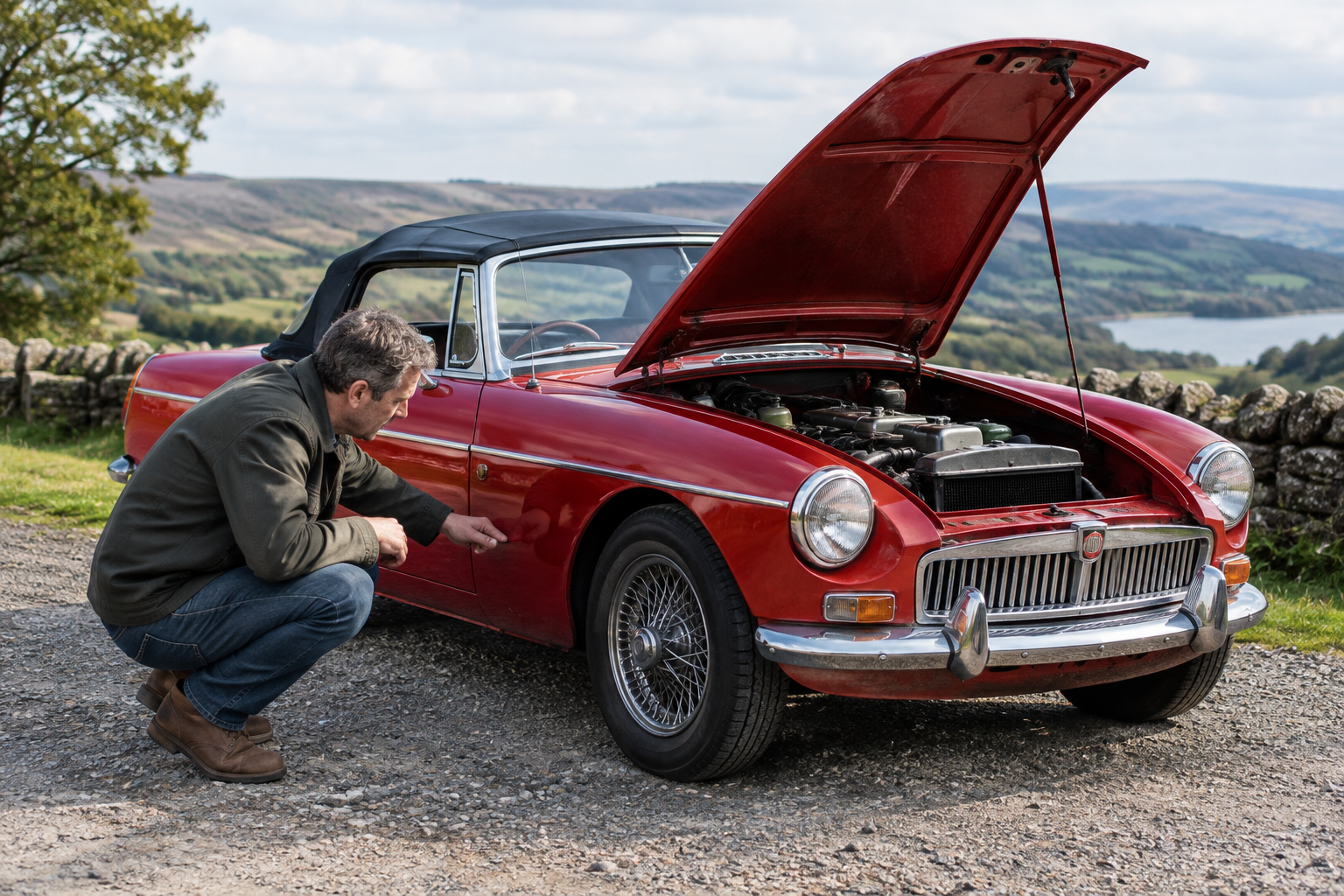
Buying an MGB is rarely just a matter of choosing a colour or deciding between a Roadster and a GT. These cars have been enjoyed, repaired, modified and stored in many different ways over the years, so two examples of the same model can feel entirely different to own. A careful assessment before purchase helps you understand what you are looking at and whether the car matches your expectations.
The aim is not to find a car with no imperfections. An older sports car may have age-related marks, previous repairs or improvements that do not follow factory specification. The important questions are whether the car is structurally sound, mechanically coherent and suitable for the type of use you have in mind.
Start with the car’s identity and history
Before examining the condition, establish exactly which MGB you are viewing. Confirm whether it is a Roadster or GT, identify the engine and gearbox fitted, and check that the vehicle’s documentation corresponds with the car. Model details and equipment can vary according to year and previous work, so it is useful to separate what is original from what has been replaced or upgraded.
A history file may include old invoices, previous test documents, photographs, workshop notes and parts receipts. Paperwork is not proof that every repair was carried out correctly, but it can show how the car has been maintained and whether major work has been undertaken. Look for continuity rather than simply a thick file: repeated attention to the same area may indicate an unresolved problem, while a clear record of significant repairs can be helpful.
Ask the seller which work has been completed recently and which jobs remain outstanding. It is also worth asking how the car is normally used, how often it is driven and whether it has spent much of its life outside. The answers provide context for what you see during the inspection.
Inspect the structure before the cosmetics
Rust is one of the most important areas to investigate on an MGB. Attractive paintwork can conceal previous corrosion repairs, so do not allow a polished exterior to replace a proper structural inspection. Pay particular attention to the sills, floor areas, castle sections, jacking points, inner wings and the areas around suspension mounting points.
Look for bubbling beneath the paint, uneven seams, fresh underseal, mismatched textures and signs that panels have been replaced. None of these automatically condemns a car. Previous panel repairs are common on older vehicles, but their quality and extent matter. A tidy, properly finished repair is very different from a patch that has been applied to delay further corrosion.
Inspect the gaps between doors, bonnet and boot lid. Uneven gaps may result from accident damage, tired hinges, previous panel replacement or simple adjustment. Open and close each panel carefully, checking that it moves without excessive force and that the shut lines remain consistent. Look underneath the car where possible, using good lighting and taking care not to disturb the vehicle.
If you cannot assess the structure confidently, arrange an inspection by someone experienced with classic cars. A specialist examination may cost less than discovering that extensive welding is required after purchase. It is also sensible to ask for permission before lifting carpets, removing trim or placing the car on a ramp.
Look beyond the paint and brightwork
Paintwork should be assessed in natural light if possible. Look along the panels for ripples, changes in shade, overspray and visible repairs. A repaint is not necessarily a disadvantage; the key consideration is whether the preparation was sound and whether the finish reflects the standard you want to maintain.
Check the windscreen surround, door frames, boot edges and bonnet lip for corrosion or lifting paint. Chrome bumpers, grille work, handles and mirrors can be expensive or time-consuming to replace, particularly when several pieces need attention. Examine rubber seals and weatherstrips as well. Deteriorated seals can allow water into the cabin and may contribute to damp carpets or corrosion.
On a Roadster, inspect the hood carefully. Check the fabric or vinyl for splits, the seams for separation and the frame for damage or stiffness. Raise and lower the hood without forcing it, and check that it sits correctly when secured. On a GT, examine the tailgate, rear glass surround and load area for signs of water ingress. In either body style, a clean, dry interior is a useful indication that the car has been cared for, although it is not a substitute for checking underneath the carpets.
Assess the engine bay and cooling system
It is helpful to see the engine before it has been warmed up. A cold start can reveal how readily the engine fires, how stable the idle is and whether the exhaust produces unusual smoke. Ask the seller not to start the car immediately if you want to carry out this check.
Inspect for oil or coolant leaks around the engine, gearbox and radiator. Older engines may show some staining, but active drips deserve investigation. Check the condition of hoses, belts, wiring and battery mounting. Look for loose connections, brittle insulation and improvised repairs. A tidy engine bay is encouraging, although a freshly cleaned one may make it harder to identify recent leaks.
Once running, listen for changes in the engine note as it warms. Pay attention to rattles, knocks, tapping sounds and uneven running. Check the temperature gauge during the drive and allow the engine to reach normal operating temperature. Overheating may have several possible causes, including problems with the cooling system, ignition, fuelling or engine condition, so it should not be dismissed as a minor adjustment.
Do not judge an engine solely by its appearance. A less-than-perfect finish can coexist with strong mechanical condition, while a detailed bay may conceal worn components. Maintenance records, a cold start and a thorough road test are more useful than presentation alone.
Check the gearbox, clutch, steering and suspension
During the test drive, select each gear deliberately. The gearbox should engage without excessive force, graunching or jumping out of gear. Some older gearboxes have a different feel from a modern car, but difficulty selecting a gear or a noisy transmission merits further investigation. Check reverse with care and listen for unusual noises that change with road speed or engine speed.
Test the clutch during normal pull-away and, where safe, under moderate acceleration in a higher gear. Slipping, juddering or a very high biting point may indicate wear or adjustment issues. Also check that the clutch pedal returns properly and that gear changes do not require excessive effort.
The steering should feel consistent, with no alarming looseness at the wheel. On a straight road, notice whether the car continually pulls to one side or requires constant correction. Uneven tyre wear can point to alignment, suspension or worn-component problems. Examine the tyres for age-related cracking, damage and mismatched types or sizes.
Drive over a representative variety of surfaces at sensible speeds. Listen for knocks from the suspension and feel for excessive bouncing after a bump. Test the brakes progressively in a safe area, checking that the car stops in a straight line and that the pedal remains firm. A brake warning light, pulling to one side or vibration under braking should be investigated before the car is considered ready for regular use.
Examine the interior and electrical equipment
The interior can show how an MGB has been used. Inspect the seats, carpets, dashboard, door cards and trim for wear, dampness and poor repairs. Some patina may be entirely acceptable, particularly if you intend to use the car regularly, but water damage and persistent musty smells deserve attention.
Operate every switch you can, including the lights, indicators, wipers, heater fan, horn, instruments and interior lamps. Check that the gauges respond sensibly and that the charging warning light behaves as expected when the ignition is switched on and the engine starts. Non-standard wiring should be examined carefully, especially where accessories have been added.
Look at the boot and spare-wheel area for corrosion or standing water. Check that the jack, wheel-brace and other equipment are present if they form part of the sale. Missing items may be replaceable, but they should be included in your assessment of the car’s overall condition.
Match the car to your ownership plans
A good MGB for one owner may be the wrong choice for another. Decide whether you want a car for occasional touring, regular local use, shows, mechanical learning or a full restoration. A largely complete, usable car may suit someone who wants to drive immediately, while a project can be rewarding for an owner with suitable space, time and skills.
Consider how much originality matters to you. Some MGBs have been fitted with upgrades to improve usability, reliability or performance. Others have been restored with close attention to their original specification. Neither approach is automatically right or wrong, but you should understand what has been changed and whether the work is documented.
Be realistic about the first round of maintenance. Even a sound car may benefit from fresh fluids, filters, belts, hoses, tyres or brake attention after purchase. Keep a reserve for work that becomes apparent once the car is used regularly. If you are comparing professionally prepared examples, you can view current MGB stock and use the published specification of any relevant car as a starting point for questions.
Ask clear questions and make a measured decision
Take notes during the inspection and separate urgent faults from cosmetic preferences. Ask whether the car can be inspected underneath, whether a cold start is possible and whether a road test is permitted. If you are unsure about a particular repair, ask for photographs, invoices or an explanation of the work rather than relying on vague descriptions.
It is useful to compare your findings with examples that have already changed hands. The sold cars archive can provide context when considering how different specifications and levels of preparation are presented, although each vehicle must still be judged on its own condition.
For cars that have undergone extensive work, ask for a clear account of the restoration or rebuild. A detailed specification can help you understand the components and methods used; California Classics (Hull) Ltd provides a MGB rebuild specification for this purpose. If you need to discuss a particular car or inspection question, you can contact the company through its contact page.
The best purchase decision is an informed one. Take your time, inspect the structure first, test the mechanical systems properly and choose a car whose condition and character suit the way you intend to own it. An MGB can be a rewarding classic, but the enjoyment starts with understanding what is in front of you.